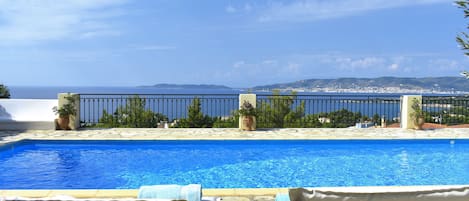
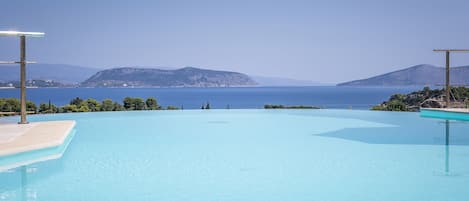
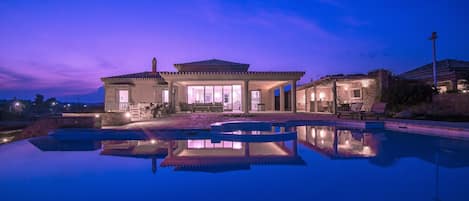
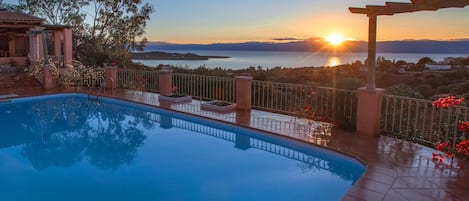
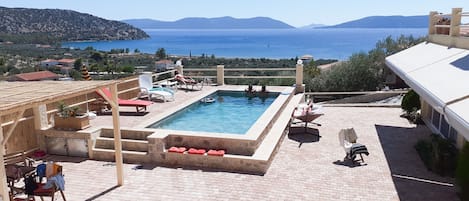
The view from Villa Gournes is truly unique. From most corners of the property, you can look out over the Saronic Gulf and straight across to Spetses, which lies directly across the water.
The area as a whole is very quiet and has little traffic. Here, you can truly enjoy a peaceful and private holiday in idyllic surroundings.
In addition to a number of secluded beaches in the immediate vicinity, you can easily head to the bustling life of Porto Heli—just 5 minutes away—whenever you wish. Here, restaurants line the streets, offering both Greek and international specialities. The marina in the harbour is a popular hangout and attracts tourists from all over the world.
Porto Heli offers plenty of activities and excursions for those who prefer an active holiday. There are excellent opportunities for water sports and plenty of bars, cafes, kiosks, souvenir shops, and taverns. ATMs, internet cafes, pharmacies, and car hire are just some of the many services available. The beaches stretch out in a row—here you can swim, snorkel, and enjoy the sun, whether you prefer to be alone or with others. The popular islands of Spetses and Hydra lie directly across from each other and can be reached by water taxi or ferry.
We also recommend a visit to the ancient theatre of Epidavros. The theatre at Epidavros is located about 40 km from Porto Heli and is the sanctuary of the Greek god of healing, Asclepius, as well as the site of one of the best-preserved amphitheatres in Greece.
Nafplion, the capital of Greece in the 19th century, with its mix of Venetian, Ottoman, and neoclassical buildings, is a feast for the eyes and is only 90 km away. The view from the Palamidi Fortress, towering over the city, is spectacular, and you can either walk up the 999 steps or drive most of the way and climb the rest on foot.
Other interesting places include the old fishing village of Porto Heli, the cosmopolitan St. Aemilianus area with its picturesque chapel, the famous Frachethi Cave at Koilada, the windmills in Kranidi, the caves near the village of Didyma, the monastery of Agioi Anargyroi, and the “Avgo” monastery.
.