

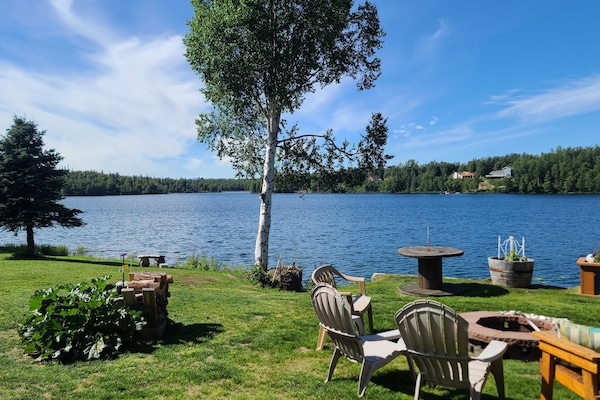
The lakeside setting of Nikiski is ready to explore
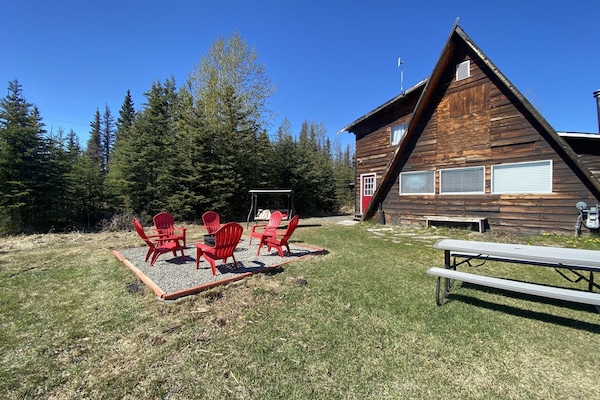
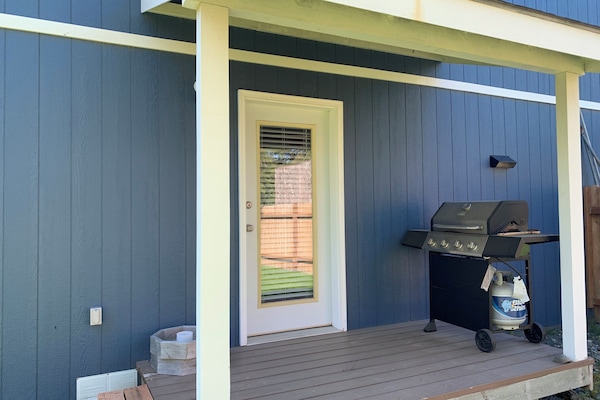
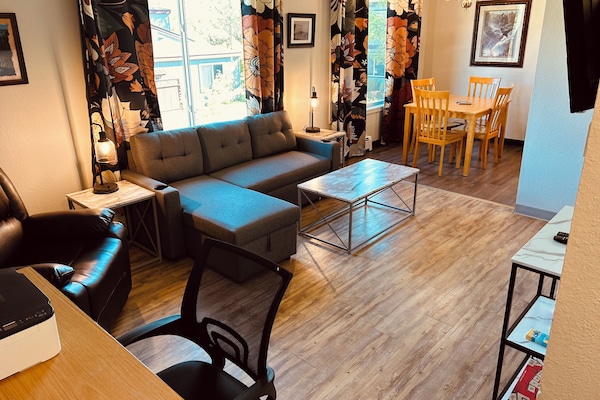
The lake and riverfront create a pretty picture of Nikiski. This city's canoeing, water park and fishing draw many visitors. Are you looking for specific amenities for your getaway? Many of our holiday rentals feature full kitchens and laundry facilities.
Sightseeing in and around Nikiski
Do you want to discover top things to see and do while you're in the area? Venture out of your cosy holiday rental and check out everything that Nikiski has to offer. Here are some of the top attractions to put on your list, all within 30 miles (48.2 km) of the city centre:
- Soldotna Regional Sports Complex (16.1 mi / 26 km)
- Kotsina Road (3 mi / 4.9 km)
- Jumping Junction (13.3 mi / 21.4 km)
- Phormation Chiropractic & Day Spa (15.6 mi / 25.1 km)
- Birch Ridge Golf Course (16.4 mi / 26.4 km)
- Kenai Golf Course (9.8 mi / 15.7 km)
Exploring the natural landscape of Nikiski
Whether you're an adventurous traveller or just want to appreciate the scenery, Nikiski is a great place to get out in nature. These are some of the area's most eye-catching sights, all within 30 miles (48.2 km) of the city centre:
- Flat Lake (7 mi / 11.3 km)
- Kenai Beach (9.7 mi / 15.7 km)
- Cunningham Park (10.9 mi / 17.5 km)
- Centennial Park (16 mi / 25.7 km)
- Soldotna Creek Park (16.2 mi / 26.1 km)
- Island Lake (1.3 mi / 2 km)
Travelling to and around Nikiski
Fly into Kenai, AK (ENA-Kenai Municipal), the closest airport, located 8.8 mi (14.1 km) from the city centre. If you can't find a flight that's convenient for your trip, you could also fly into Tyonek, AK (TYE), which is 26.8 mi (43.2 km) away.
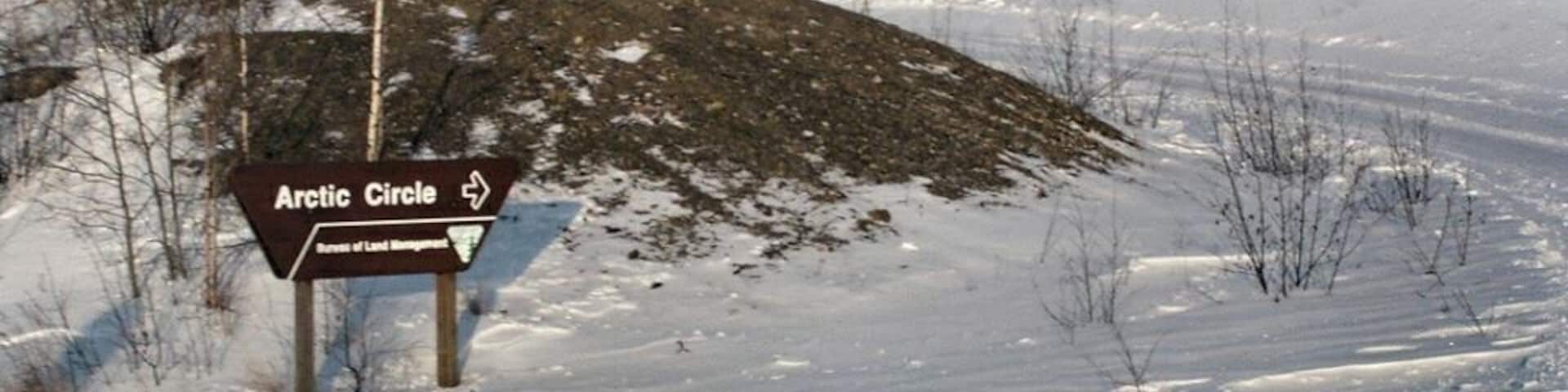
![The Arctic Circle is one of the five major circles of latitude that mark maps of the Earth. As of 16 February 2015, it runs 66°33′45.6″ north of the Equator.
The region north of this circle is known as the Arctic, and the zone just to the south is called the Northern Temperate Zone. The equivalent polar circle in the Southern Hemisphere is called the Antarctic Circle.
The Arctic Circle is the southernmost latitude in the Northern Hemisphere at which the sun can remain continuously above or below the horizon for 24 hours (at the June solstice and December solstice respectively). North of the Arctic Circle, the sun is above the horizon for 24 continuous hours at least once per year (and therefore visible at midnight) and below the horizon for 24 continuous hours at least once per year (and therefore not visible at noon). On the Arctic Circle those events occur, in principle, exactly once per year, at the June and December solstices, respectively. However, in practice, because of atmospheric refraction and mirages, and because the sun appears as a disk and not a point, part of the midnight sun may be seen on the night of the northern summer solstice up to about 50′ (90 km (56 mi)) south of the Arctic Circle; similarly, on the day of the northern winter solstice, part of the sun may be seen up to about 50′ north of the Arctic Circle. That is true at sea level; those limits increase with elevation above sea level, although in mountainous regions there is often no direct view of the true horizon.
The position of the Arctic Circle is not fixed. It directly depends on the Earth's axial tilt, which fluctuates within a margin of 2° over a 40,000-year period,[2] notably due to tidal forces resulting from the orbit of the Moon. The Arctic Circle is currently drifting northwards at a speed of about 15 m (49 ft) per year; see Circle of latitude for more information.
#snow](https://images.trvl-media.com/place/6140564/a9f9449e-bab4-40a6-a9a1-5356b0cc2aa8.jpg?impolicy=resizecrop&rw=1920&ra=fit&ch=480)


