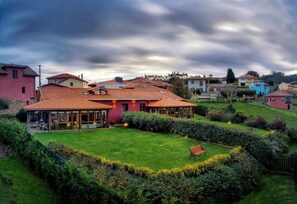
La Era de Somao is a house built in the second half of the 18th century, lovingly restored in 2009 while preserving its original style and materials.
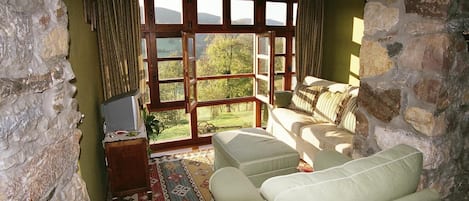
La Era de Somao is a house built in the second half of the 18th century, lovingly restored in 2009 while respecting the original style and materials, which, combined with a touch of modernity, ensures our guests enjoy a truly (website hidden) stay. The house features three double bedrooms, a kitchen fully equipped with all appliances, a dining room, a spacious living room, a full bathroom, Wi-Fi, Digital Plus, and HD TV. It has a large, fully enclosed garden equipped with a barbecue and outdoor furniture, perfect for enjoying the nice weather. From the house, you can enjoy beautiful views of the sea and the mountains. Somao or Somado is a parish in the Asturian municipality of Pravia, with a population of 330. It is located north of (email hidden) the capital, Pravia. The parish borders Muros de Nalón to the north; the parish of Santianes to the east and south; Villafría to the southwest; and Cudillero to the west.It is worth noting the high concentration of “Indianos” buildings. The architecture changed radically around 1900 when the rural landscape was complemented by the “Indianos” mansions financed with fortunes amassed in Cuba; La Torre, the Solís or Marciel Mansion, and the Noceu are examples of buildings that reflect colonial Modernist styles and combine high-quality construction with imagination and stylistic elements.
Our only common area is the laundry room. It is located beneath a typical Asturian granary (hórreo). It has everything you need, from laundry supplies to two washing machines.
We are always available to assist our guests with whatever they need. We live just a few metres from our houses.
Somao or Somado is a parish in the Asturian municipality of Pravia, with a population of 330. It is located in the northern part of the municipality, 11 km from the capital, Pravia. The parish borders Muros de Nalón to the north; the parish of Santianes to the east and south; Villafría to the southwest; and Cudillero to the west.
It is worth noting the high concentration of “Indianos” buildings. The architecture changed radically around 1900, when the rural landscape was complemented by the “Indianos” mansions financed with fortunes amassed in Cuba; La Torre, the Solís or Marciel Mansion, and the Noceu are examples of buildings that reflect colonial Modernist styles and combine high-quality construction with imagination and stylistic elements.
In front of the house are several private courtyards